

Introduction
- How AI Is Shaping the Future of Work and Education is one of the most transformative developments of the 21st century. Artificial intelligence is rapidly changing the way people work, learn, communicate, and solve problems. What was once considered a futuristic technology is now deeply embedded in everyday life, influencing industries, businesses, schools, universities, and even personal learning experiences. As AI continues to advance, its impact on work and education is becoming more visible, creating both exciting opportunities and important challenges for individuals and organizations around the world.
- The modern workplace is undergoing a major transformation driven by artificial intelligence. Businesses are increasingly adopting AI-powered tools to improve efficiency, reduce operational costs, and make smarter decisions. Tasks that previously required hours of manual effort can now be completed within minutes using intelligent systems capable of analyzing data, identifying patterns, and generating insights. From customer service and marketing to finance, healthcare, and manufacturing, AI is helping organizations streamline operations and improve productivity. As a result, employees are spending less time on repetitive administrative tasks and more time focusing on creative thinking, innovation, and strategic planning.
- This shift is changing the skills employers seek in today’s workforce. While technical knowledge remains important, companies increasingly value human skills that technology cannot easily replicate. Critical thinking, communication, adaptability, emotional intelligence, leadership, and problem-solving have become essential qualities in an AI-driven workplace. Workers who can effectively combine these skills with technological tools are likely to have a significant advantage in the future job market. Consequently, continuous learning and professional development are becoming more important than ever before.
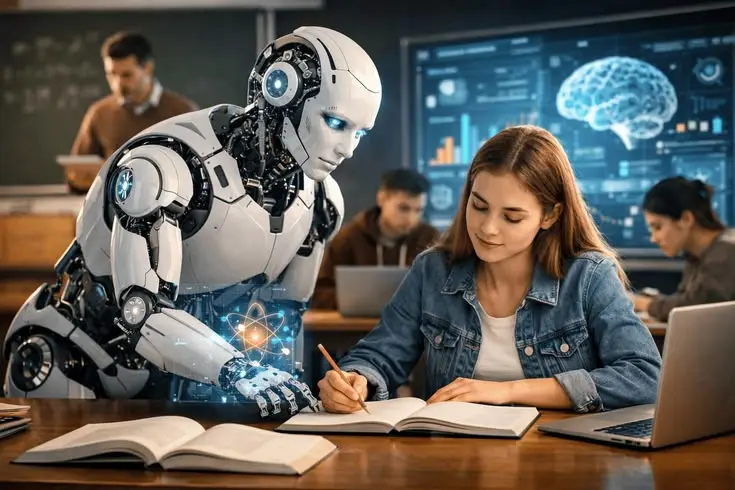
- At the same time, education is experiencing a revolution fueled by artificial intelligence. Traditional teaching methods are being enhanced by intelligent learning platforms that can adapt to the needs of individual students. Unlike conventional classroom approaches, AI-powered educational systems can analyze a learner’s progress, identify strengths and weaknesses, and provide personalized recommendations. This allows students to learn at their own pace while receiving targeted support in areas where improvement is needed. Such personalized experiences can increase engagement, improve understanding, and lead to better learning outcomes.
- Educators also benefit from these technological advancements. AI tools can assist with grading, lesson planning, performance tracking, and administrative tasks, giving teachers more time to focus on instruction and student support. By using data-driven insights, educators can better understand student needs and develop strategies that improve learning effectiveness. In addition, AI-powered platforms make education more accessible to people who may face geographical, financial, or physical barriers to traditional learning environments.
- Beyond schools and workplaces, AI is encouraging a culture of lifelong learning. The rapid pace of technological change means that knowledge and skills can quickly become outdated. Professionals across all industries must continuously update their expertise to remain competitive and relevant. AI-supported learning systems help make this process more efficient by recommending personalized training programs, online courses, and skill-development opportunities tailored to individual goals and career paths.
- Despite its many advantages, the rise of AI also raises important concerns. Issues such as data privacy, cybersecurity, algorithmic bias, ethical decision-making, and potential job displacement continue to generate debate among experts, educators, and policymakers. While AI has the potential to improve productivity and educational outcomes, its implementation must be guided by transparency, fairness, and accountability. Organizations and institutions have a responsibility to ensure that technology serves people in a way that promotes inclusion and equal opportunity.
- Understanding How AI Is Shaping the Future of Work and Education is essential for anyone preparing for the future. Whether you are a student planning a career, a teacher adapting to new educational methods, or a professional seeking to remain competitive in a changing job market, awareness of AI’s impact can help you make informed decisions. As technology continues to evolve, those who embrace learning, adaptability, and innovation will be better positioned to thrive in a world where human potential and intelligent systems increasingly work together to create new possibilities.
What is How AI Is Shaping the Future of Work and Education?

- How AI Is Shaping the Future of Work and Education refers to the growing influence of artificial intelligence on professional environments and learning systems. Artificial intelligence includes technologies that enable machines to perform tasks that typically require human intelligence. These tasks may involve recognizing patterns, understanding language, analyzing information, making predictions, and supporting decision-making.
- In the workplace, AI is used to automate routine processes, improve efficiency, analyze large datasets, and assist employees with complex tasks. Organizations use AI-powered tools for customer service, scheduling, forecasting, quality control, cybersecurity, and many other functions.
- In education, AI helps create personalized learning experiences. Learning platforms can adapt lessons based on a student’s progress, strengths, and weaknesses. Teachers can use data-driven insights to identify learning gaps and provide targeted support.
- The concept is not simply about replacing manual work with machines. Instead, it focuses on improving productivity, enhancing learning outcomes, and helping people work smarter. Human creativity, critical thinking, communication, and leadership remain essential components of success.
- As technology continues to advance, understanding How AI Is Shaping the Future of Work and Education becomes increasingly important for individuals and organizations alike.
Why is How AI Is Shaping the Future of Work and Education Important?

- The importance of How AI Is Shaping the Future of Work and Education continues to grow for several reasons.
- First, businesses face intense competition and constant pressure to improve efficiency. AI enables organizations to automate repetitive tasks, reduce errors, and make better decisions using data-driven insights.
- Second, the skills required in the job market are changing rapidly. Many traditional roles are evolving as technology becomes more integrated into daily operations. Workers who understand AI and related technologies are often better positioned to adapt and succeed.
- Third, educational institutions must prepare students for careers that may not yet exist. Learning systems need to teach not only academic subjects but also adaptability, digital literacy, creativity, and problem-solving skills.
- Fourth, AI improves accessibility. People can access educational content, training programs, and professional resources from virtually anywhere with an internet connection.
- Finally, AI supports lifelong learning. As industries evolve, workers need continuous education to stay relevant. Intelligent learning systems make skill development more personalized and efficient.
- These factors highlight why understanding How AI Is Shaping the Future of Work and Education is essential for future success.
Detailed Step-by-Step Guide
Step 1: Understand the Fundamentals of AI
The first step is learning the basics of artificial intelligence. Understanding concepts such as machine learning, automation, natural language processing, and predictive analytics provides a strong foundation.
Beginners do not need advanced technical knowledge. A general understanding of how AI works helps individuals evaluate opportunities and make informed decisions.
Step 2: Recognize AI Applications in the Workplace
The next step is identifying where AI already exists in professional environments.
Common workplace applications include:
- Automated customer support
- Data analysis tools
- Fraud detection systems
- Inventory management
- Scheduling software
- Recruitment screening
- Project management assistance
Recognizing these applications helps employees understand how their roles may evolve.
Step 3: Explore AI in Education
Educational technology is changing rapidly.
Examples include:
- Personalized learning platforms
- Intelligent tutoring systems
- Automated grading tools
- Learning analytics dashboards
- Virtual learning assistants
These solutions help students receive customized support while allowing educators to focus more on teaching and mentoring.
Step 4: Develop Future-Ready Skills
Technology continues to evolve, making skill development a priority.
Key skills include:
- Critical thinking
- Communication
- Creativity
- Emotional intelligence
- Leadership
- Collaboration
- Adaptability
- Problem-solving
- Digital literacy
- Decision-making
These abilities complement technology and remain valuable across industries.
Step 5: Learn to Work Alongside AI
Successful professionals view AI as a tool rather than a competitor.
Practical uses include:
- Organizing information
- Analyzing trends
- Generating reports
- Managing schedules
- Supporting research
- Streamlining workflows
Human oversight remains necessary to ensure accuracy and ethical use.
Step 6: Use Personalized Learning Opportunities
One major example of How AI Is Shaping the Future of Work and Education is personalized learning.
Benefits include:
- Customized study plans
- Instant feedback
- Progress tracking
- Adaptive lesson difficulty
- Better engagement
Students can focus on areas that require improvement while advancing efficiently through topics they already understand.
Step 7: Understand Ethical Responsibilities
Ethical considerations play a crucial role in AI adoption.
Important areas include:
- Data privacy
- Transparency
- Accountability
- Fairness
- Security
- Inclusion
Organizations and educators should establish clear policies that promote responsible technology use.
Step 8: Embrace Lifelong Learning
Continuous learning is becoming essential.
Effective strategies include:
- Taking online courses
- Reading industry publications
- Attending workshops
- Joining professional communities
- Practicing new skills regularly
- Following technology trends
Individuals who continue learning are better prepared for future changes.
Step 9: Monitor Industry Trends
Technology evolves quickly.
Stay informed about:
- Emerging tools
- New educational methods
- Workplace automation trends
- Industry requirements
- Skill demands
Awareness helps individuals make proactive career and learning decisions.
Step 10: Apply Knowledge Through Real Projects
Theory becomes valuable when applied in practical situations.
Examples include:
- Completing digital projects
- Using AI-powered productivity tools
- Participating in training programs
- Solving workplace challenges
- Creating personal learning plans
Practical experience builds confidence and competence.
Benefits of How AI Is Shaping the Future of Work and Education
The advantages are extensive and continue to expand.
- Improves productivity through automation
- Reduces repetitive manual work
- Supports faster decision-making
- Enhances data analysis capabilities
- Creates personalized learning experiences
- Provides instant feedback for learners
- Increases educational accessibility
- Encourages lifelong learning
- Improves resource management
- Helps teachers identify learning gaps
- Supports innovation and creativity
- Enhances collaboration between teams
- Reduces administrative burdens
- Improves workplace efficiency
- Enables flexible learning environments
- Helps organizations remain competitive
- Supports better customer experiences
- Expands access to professional development
- Encourages skill growth
- Assists with complex problem-solving
Disadvantages / Risks
Despite its benefits, AI also presents challenges.
- Potential job displacement in some sectors
- Dependence on technology
- Data privacy concerns
- Security risks
- Algorithmic bias
- Unequal access to digital resources
- High implementation costs
- Need for ongoing training
- Reduced demand for certain routine tasks
- Ethical concerns regarding automation
- Lack of transparency in some systems
- Possibility of inaccurate outputs
- Digital divide between communities
- Overreliance on automated recommendations
- Regulatory and compliance challenges
Addressing these risks requires thoughtful planning and responsible implementation.
Common Mistakes to Avoid
- Many people misunderstand How AI Is Shaping the Future of Work and Education because they focus on myths rather than reality.
- One common mistake is assuming AI will replace all jobs. While automation affects certain tasks, most roles evolve instead of disappearing entirely.
- Another mistake is ignoring skill development. Technology changes quickly, and individuals who stop learning may struggle to remain competitive.
- Overreliance on automated outputs is also problematic. Human review is essential for accuracy, context, and ethical decision-making.
- Some organizations adopt technology without clear objectives. Implementing AI without a defined strategy can lead to wasted resources and disappointing results.
- Neglecting privacy and security considerations is another serious error. Sensitive information must be protected through strong policies and safeguards.
- Many learners focus only on technical skills. However, communication, creativity, leadership, and emotional intelligence remain critical in an increasingly automated world.
- Finally, resisting change entirely can limit growth opportunities. A balanced approach that combines curiosity with critical thinking is usually the most effective strategy.
FAQs
What does AI mean in the context of work and education?
AI refers to technologies that enable machines to perform tasks involving learning, analysis, language understanding, and decision support. In work and education, AI helps improve efficiency, personalization, and productivity
How is AI changing the workplace?
AI automates repetitive tasks, improves data analysis, supports decision-making, enhances customer service, and helps employees focus on higher-value activities that require human judgment and creativity.
How does AI improve learning experiences?
AI personalizes lessons, provides instant feedback, identifies learning gaps, recommends resources, and adapts educational content based on student performance and progress.
Will AI replace teachers?
No. AI can assist educators by handling administrative tasks and providing learning insights, but teachers remain essential for mentorship, communication, motivation, and social development.
What skills are most important in an AI-driven future?
Critical thinking, adaptability, creativity, communication, emotional intelligence, collaboration, leadership, and digital literacy are among the most valuable future skills.
Can small businesses benefit from AI?
Yes. Small businesses can use AI-powered tools for marketing, customer support, scheduling, analytics, inventory management, and productivity improvement
Expert Tips & Bonus Points
- Start learning early rather than waiting for change to become unavoidable.
- Develop a growth mindset. Individuals who embrace learning opportunities often adapt more successfully to technological shifts.
- Focus on collaboration between humans and technology instead of competition.
- Strengthen communication skills because clear communication remains valuable in every industry.
- Build digital literacy by understanding how modern tools collect, process, and present information.
- Stay informed about ethical considerations and responsible technology use.
- Create a personal development plan that includes both technical and non-technical skills.
- Practice critical evaluation. Not every automated recommendation is accurate or appropriate.
- Network with professionals in your field to learn about emerging opportunities and industry expectations.
- Remain curious. Curiosity encourages innovation, learning, and long-term career growth.
- Remember that technology changes quickly, but adaptability allows people to thrive in changing environments.
Conclusion

How AI Is Shaping the Future of Work and Education is one of the most significant developments of the modern era. Artificial intelligence is no longer a concept limited to science fiction or advanced research laboratories. It has become a practical technology that influences how people learn, communicate, work, and make decisions every day. From automating routine workplace tasks to creating personalized learning experiences for students, AI is transforming both professional and educational environments at an unprecedented pace.
In the workplace, AI is helping organizations improve efficiency, productivity, and decision-making. Businesses can analyze large amounts of data more quickly, automate repetitive processes, and provide better services to customers. Employees are increasingly using intelligent tools to support their daily responsibilities, allowing them to focus on higher-value activities that require creativity, strategic thinking, and human judgment. Rather than eliminating the need for people, AI is changing the nature of many jobs and encouraging workers to develop new skills that complement technological capabilities.
The impact of AI on education is equally important. Traditional learning models are evolving as educational institutions adopt technology-driven solutions that support personalized instruction and improved learning outcomes. Students can now access tailored learning experiences, receive instant feedback, and progress at a pace that matches their individual needs. Teachers benefit from valuable insights into student performance, enabling them to provide targeted support and create more engaging learning environments. As a result, education is becoming more flexible, accessible, and effective for learners of all ages.
However, the growing influence of AI also brings challenges that cannot be ignored. Issues such as data privacy, cybersecurity, ethical concerns, algorithmic bias, and workforce disruption require careful attention. Governments, businesses, educators, and technology developers must work together to establish responsible practices that ensure AI is used fairly and transparently. Addressing these concerns is essential for building trust and maximizing the positive impact of technological innovation.
Another key takeaway is the importance of lifelong learning. As industries continue to evolve, individuals must remain adaptable and committed to continuous skill development. Technical knowledge is valuable, but human-centered abilities such as communication, critical thinking, creativity, leadership, emotional intelligence, and collaboration will remain essential. These skills allow people to work effectively alongside technology and contribute value in areas where human insight is irreplaceable.
Looking ahead, the future will likely bring even greater integration of AI into workplaces and educational systems. New career opportunities will emerge, learning methods will continue to improve, and organizations will discover innovative ways to combine human expertise with intelligent technologies. Those who embrace change, stay informed, and invest in personal growth will be best positioned to succeed in this evolving landscape.
Ultimately, How AI Is Shaping the Future of Work and Education is not just about technology. It is about creating better opportunities for people to learn, grow, innovate, and achieve their goals. When used responsibly, AI has the potential to enhance human capabilities rather than replace them. By combining technological advancement with ethical responsibility and continuous learning, individuals and organizations can build a future that is more productive, inclusive, and prepared for the challenges and opportunities of tomorrow.
