

Introduction
Smartphones have become essential tools for work, study, entertainment, and communication. Every day, users download documents, save photos, receive files through messaging apps, and store videos on their devices. As the amount of data grows, keeping everything organized becomes increasingly challenging. This is where the best file management apps for Android and iPhone can make a significant difference.
A file management app helps users organize, move, rename, copy, delete, and locate files quickly. Instead of searching through multiple folders or scrolling endlessly through storage, users can manage everything from a single interface. Whether you are a student managing assignments, a professional handling business documents, or a casual user storing media files, a reliable file manager can save valuable time.
Modern file management apps offer much more than basic organization. Many include cloud storage integration, file sharing tools, compression features, storage analysis, and advanced search functions. These features help users maintain a clean and efficient device while ensuring important files remain accessible whenever needed.
Android and iPhone users have access to a wide range of file management applications. Some focus on simplicity, while others provide advanced tools for power users. Choosing the right option depends on your needs, device type, and preferred workflow.
In this guide, you will learn what file management apps are, why they matter, how to choose the right one, and which features to prioritize. By the end, you will have a clear understanding of how the best file management apps for Android and iPhone can improve your digital organization and productivity.
What Is Best File Management Apps for Android and iPhone?
The term “best file management apps for Android and iPhone” refers to applications designed to help users organize and manage files stored on their smartphones and connected cloud services.
These apps act as digital filing cabinets. They allow users to view folders, sort files, transfer data, create directories, and locate important documents quickly. Instead of relying on scattered storage locations, users gain centralized control over their content.
Typical file types managed by these apps include:
- Documents
- Images
- Videos
- Audio files
- PDFs
- ZIP archives
- Application files
- Cloud-stored content
Some file management apps are built into operating systems. For example, Android devices often include a native file manager, while iPhones come with the Files app. However, many third-party solutions provide additional functionality and flexibility.
Popular examples include:
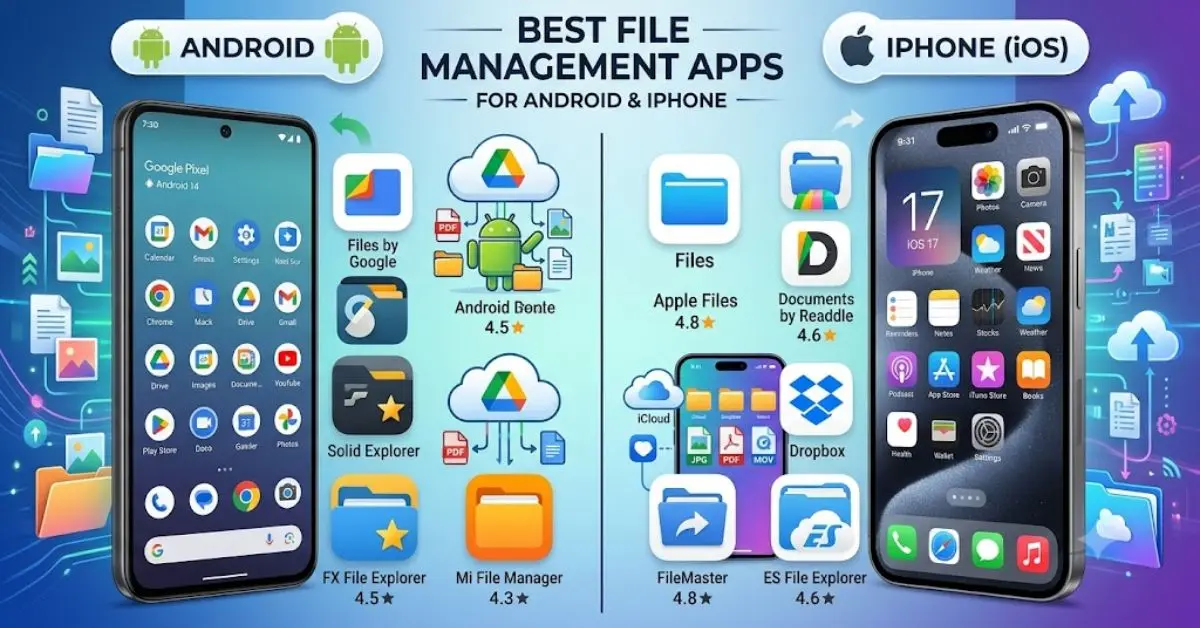
- Files by Google
- Solid Explorer
- CX File Explorer
- File Manager Plus
- Documents by Readdle
- Total Files
The best file management apps for Android and iPhone simplify storage management while helping users stay organized and productive.
Why Is Best File Management Apps for Android and iPhone Important?
Many smartphone users underestimate how quickly digital clutter can accumulate. Downloads, screenshots, duplicate images, temporary files, and unused documents can consume storage space and reduce efficiency.
A quality file management app offers several important advantages.
Better Organization
Files can be sorted into folders and categories, making them easier to locate. Instead of searching manually, users can access content within seconds.
Improved Productivity
Time spent looking for files can add up quickly. Efficient file management reduces distractions and streamlines workflows.
Storage Optimization
Many file managers identify large files, duplicates, and unnecessary content. Removing these items helps free up valuable storage space.
Easy File Transfers
Users can move files between internal storage, SD cards, cloud services, and connected devices without complications.
Enhanced Security
Some file management apps provide password protection, encrypted folders, and secure storage options for sensitive information.
Cloud Integration
Modern users often store files across multiple cloud platforms. File management apps simplify access to services such as cloud drives without switching between different applications.
Faster Access to Important Documents
Students, professionals, and business owners frequently need quick access to important files. A file manager keeps everything organized and easy to find.
Reduced Device Clutter
A clean storage system contributes to a smoother user experience. Organized devices are easier to maintain and less frustrating to use.
The best file management apps for Android and iPhone play a crucial role in keeping digital content structured, accessible, and secure.
Detailed Step-by-Step Guide to Choosing and Using the Best File Management Apps for Android and iPhone
Selecting the right file manager is not simply about downloading the most popular app. Different users have different storage needs, workflows, and preferences. Follow these steps to find and use the best file management apps for Android and iPhone effectively.
Step 1: Identify Your File Management Needs

Before installing any app, determine how you use your smartphone.
Ask yourself:
- Do you mainly store documents?
- Do you manage large video files?
- Do you frequently transfer files between devices?
- Do you use cloud storage services?
- Do you need advanced security features?
For example, a student may prioritize document organization, while a content creator may require advanced media management.
Step 2: Check Device Compatibility
Not every file manager offers identical features on Android and iPhone.
When choosing an app, verify:
- Operating system compatibility
- Storage permissions
- Cloud integration support
- Security features
- Update frequency
Apps that receive regular updates tend to offer better performance and security.
Step 3: Evaluate User Interface Design
A good file manager should simplify organization rather than complicate it.
Look for:
- Clean navigation
- Easy folder access
- Fast search functionality
- Logical categorization
- Minimal clutter
A user-friendly interface saves time and improves productivity.
Step 4: Organize Files into Categories
Once installed, begin creating a logical structure.
Example folder system:
- Documents
- Photos
- Videos
- Work Files
- Personal Files
- Downloads
- Backups
This simple structure helps maintain long-term organization.
Step 5: Remove Unnecessary Files
Most file managers provide storage analysis tools.
Review:
- Duplicate photos
- Old downloads
- Temporary files
- Unused videos
- Large forgotten documents
Regular cleanup improves storage efficiency and device performance.
Step 6: Connect Cloud Storage Accounts
Cloud integration is one of the most valuable features offered by modern file management apps.
Common services include:
- Google Drive
- Dropbox
- OneDrive
- iCloud Drive
- Box
Connecting these services allows users to manage local and cloud files from a single interface.
Step 7: Use Search and Filters
As file collections grow, search functionality becomes essential.
Use filters to locate files by:
- Name
- Date
- File type
- Size
- Location
This significantly reduces the time required to find important documents.
Step 8: Secure Sensitive Files
Many file management apps provide privacy features.
Consider protecting:
- Financial records
- Personal photos
- Business documents
- Confidential information
Security options may include:
- Password protection
- Fingerprint authentication
- Face recognition
- Encrypted folders
- Step 9: Schedule Regular Maintenance
File organization is an ongoing process.
Set a monthly reminder to:
- Delete unnecessary files
- Organize downloads
- Archive old content
- Back up important documents
Regular maintenance prevents digital clutter from returning.
Step 10: Take Advantage of Advanced Features
Many premium file managers include additional tools such as:
- ZIP extraction
- File compression
- Wireless file transfer
- Network access
- Batch file operations
These features can greatly improve efficiency for advanced users.
Top File Management Apps for Android and iPhone
Files by Google
Files by Google is one of the most popular Android file managers.
Key features include:
- Storage cleanup suggestions
- Fast file sharing
- Simple interface
- Offline file management
- Duplicate file detection
This app is ideal for beginners who want a clean and easy experience.
Solid Explorer
Solid Explorer is widely appreciated by Android power users.
Benefits include:
- Dual-pane interface
- Cloud storage support
- Advanced file operations
- Encryption tools
- Network storage access
It offers greater control than many basic alternatives.
CX File Explorer
CX File Explorer combines simplicity with useful advanced features.
Highlights include:
- Storage analysis
- Network file access
- Cloud integration
- User-friendly interface
- Fast performance
It works well for both beginners and experienced users.
File Manager Plus
File Manager Plus provides comprehensive file management capabilities.
Features include:
- Cloud support
- Storage cleanup
- Media organization
- File transfer tools
- Document management
Its balanced feature set appeals to a wide audience.
Documents by Readdle
Documents by Readdle is one of the strongest file management solutions available for iPhone users.
Advantages include:
- Excellent PDF support
- Cloud integration
- Media management
- Secure file storage
- Powerful search tools
Many professionals rely on this app for productivity tasks.
Total Files
Total Files offers flexibility and extensive cloud support.
Important features:
- Multiple cloud connections
- File organization tools
- Built-in media player
- Document viewer
- Secure storage options
It is especially useful for users managing files across multiple platforms.
- Comparing File Management Apps
- App Best For Platform
- Files by Google Beginners Android
- Solid Explorer Advanced Users Android
- CX File Explorer Everyday Use Android
- File Manager Plus Balanced Features Android
- Documents by Readdle Productivity iPhone
- Total Files Cloud Management iPhone
- How to Choose the Right File Manager
When comparing the best file management apps for Android and iPhone, focus on practical needs rather than popularity alone.
Consider:
- Ease of use
- Security options
- Cloud support
- Performance speed
- Storage tools
- File transfer capabilities
- Price
The best choice is the one that aligns with your daily workflow.
Real-World Example
Imagine a university student who stores lecture notes, assignments, research papers, videos, and presentation files.
Without proper organization:
- Files become difficult to locate.
- Storage fills quickly.
- Important documents may be lost.
Using a file management app allows the student to:
- Create course-specific folders.
- Archive completed projects.
- Back up files to cloud storage.
- Find documents instantly.
This simple approach saves time and reduces stress throughout the academic year.
Benefits of Best File Management Apps for Android and iPhone
Using the best file management apps for Android and iPhone offers numerous advantages for both casual and professional users.
- Improved File Organization
Files can be arranged into folders and categories, making them easier to locate. - Faster Access to Content
Search tools help users find documents, photos, videos, and downloads quickly. - Better Storage Management
Large files, duplicate items, and unnecessary content can be identified and removed. - Enhanced Productivity
Less time spent searching for files means more time available for important tasks. - Cloud Storage Integration
Users can manage local and cloud-based files from one convenient location. - Improved Security
Password protection and encryption features help secure sensitive information. - Easy File Sharing
Documents and media files can be transferred between devices effortlessly. - Backup Support
Important files can be stored safely and recovered when needed. - Reduced Digital Clutter
Organized storage creates a cleaner and more efficient smartphone experience. - Greater Control Over Data
Users gain complete visibility into how files are stored and managed.
Disadvantages / Risks
While file management apps are extremely useful, there are some potential drawbacks.
- Some advanced features require paid subscriptions.
- Incorrect file deletion can result in data loss.
- Certain apps may display advertisements in free versions.
- Poor-quality apps can consume device resources.
- Granting excessive permissions may create privacy concerns.
- Cloud synchronization errors can occasionally cause file conflicts.
- Complex interfaces may overwhelm beginners.
- Some features vary between Android and iPhone versions.
Understanding these risks helps users make informed decisions when selecting a file manager.
Common Mistakes to Avoid
Many users install a file management app but fail to use it effectively. Avoid these common mistakes.
Ignoring Folder Structure
Saving everything in one location creates confusion later. Create dedicated folders from the beginning.
Not Backing Up Important Files
Even the best file management apps cannot prevent every accident. Maintain regular backups.
Deleting Files Too Quickly
Always review selected files before deleting them permanently.
Choosing an App Based Only on Popularity
The most downloaded app may not meet your specific requirements.
Forgetting Regular Maintenance
Storage can become cluttered again if files are not reviewed periodically.
Overlooking Security Features
Sensitive documents should always be protected with available security tools.
Using Multiple File Managers Unnecessarily
Too many file management apps can create duplicate folders and organizational problems.
Ignoring Cloud Storage Options
Cloud integration provides additional protection and accessibility for important files.
FAQs
What is the best file management app for Android?
The best choice depends on individual needs. Files by Google is excellent for beginners because of its simplicity and cleanup tools. Advanced users often prefer Solid Explorer due to its extensive customization and powerful management features.
What is the best file management app for iPhone?
Many iPhone users choose Documents by Readdle because it combines file organization, cloud integration, document viewing, and productivity features in one application. The built-in Files app is also a reliable option for everyday use.
Are file management apps safe to use?
Most reputable file management apps are safe when downloaded from official app stores. Users should review permissions carefully and select apps from trusted developers with positive user feedback.
Can file management apps free up storage space?
Most reputable file management apps are safe when downloaded from official app stores. Users should review permissions carefully and select apps from trusted developers with positive user feedback.
Can file management apps free up storage space?
Yes. Many file managers identify duplicate files, temporary data, unused downloads, and large files that consume storage. Removing unnecessary content can significantly increase available space.
Do file management apps work with cloud storage services?
Most modern file managers support popular cloud platforms such as Google Drive, Dropbox, OneDrive, and iCloud Drive. This allows users to access and manage files from multiple locations.
Are free file management apps enough for most users?
For many people, free file management apps provide all essential features needed for organization and storage management. Premium versions are usually beneficial only for users who require advanced tools, enhanced security, or professional workflows.
Expert Tips & Bonus Points
To get the most value from the best file management apps for Android and iPhone, follow these expert recommendations.
Create Consistent Naming Conventions
Use clear file names such as:
- Project_Report_June_2026
- Budget_Q2_2026
- Vacation_Photos_Dubai
Consistent naming makes searching easier.
Organize by Category and Date
Combining categories with dates improves long-term file management.
Example:
- Work
- 2026
- 2025
- Personal
- Photos
- Documents
Use Cloud Backups Regularly
Automatic backups reduce the risk of losing important information due to device damage or accidental deletion.
Archive Older Files
Move completed projects and older documents into archive folders to reduce clutter.
Review Storage Monthly
A monthly cleanup routine prevents storage issues from becoming overwhelming.
Utilize Built-In Search Features
Modern file managers include powerful search functions that can locate files instantly.
Protect Sensitive Information
Enable passwords, biometrics, or encryption whenever possible.
Learn Keyboard Shortcuts on Tablets
Many tablet users connect keyboards. Learning shortcuts can improve file management speed dramatically.
Conclusion
The best file management apps for Android and iPhone play a vital role in helping users maintain organized, efficient, and secure digital storage. As smartphones continue to store larger amounts of personal and professional information, the ability to manage files effectively becomes increasingly important.
A quality file management app simplifies daily tasks by making files easier to locate, organize, transfer, and protect. Whether you are managing school assignments, business documents, personal photos, or multimedia content, the right file manager can significantly improve your productivity and reduce frustration.
Apps such as Files by Google, Solid Explorer, CX File Explorer, File Manager Plus, Documents by Readdle, and Total Files offer a variety of features designed to meet different user needs. Some focus on simplicity, while others provide advanced capabilities for power users who require greater control over their files and storage systems.
Choosing the right application starts with understanding your requirements. Consider factors such as security, cloud integration, ease of use, storage management tools, and device compatibility before making a decision. Once installed, maintaining a consistent folder structure and performing regular storage reviews will maximize the benefits of your chosen app.
Ultimately, investing a small amount of time in proper file organization can save countless hours in the future. By using one of the best file management apps for Android and iPhone, users can enjoy a cleaner, faster, and more productive mobile experience while keeping important files accessible and secure at all times.
