

Introduction
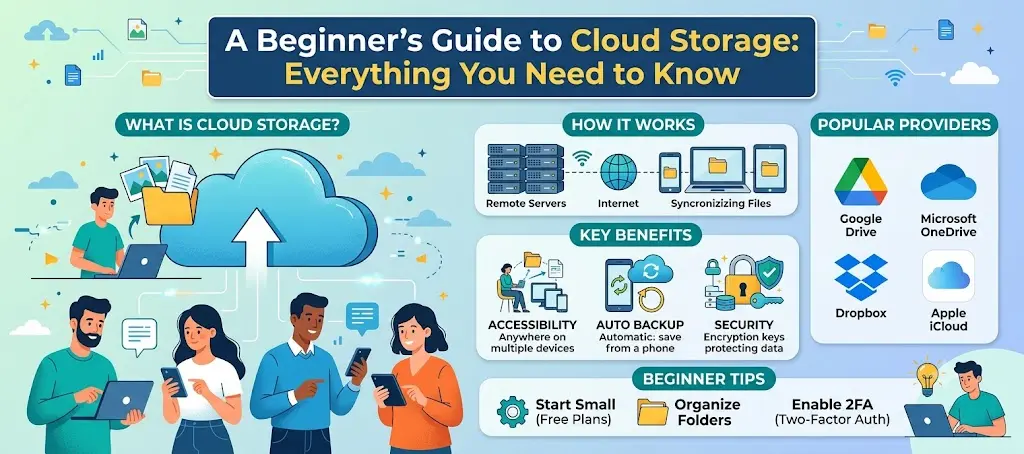
Technology has changed the way people store, access, and share information. In the past, documents, photos, videos, and important files were usually saved on physical devices such as hard drives, USB flash drives, or personal computers. While these storage methods are still useful, they have limitations. Devices can fail, files can be accidentally deleted, and accessing data from different locations can be difficult. This is where cloud storage has become a game-changing solution.
A beginner’s guide to cloud storage helps users understand how modern digital storage works and why it has become such an important part of everyday life. Whether you are a student managing assignments, a professional handling work documents, or a family preserving treasured memories, cloud storage offers convenience, flexibility, and security.
Cloud storage allows users to save files on remote servers that can be accessed through the internet. Instead of relying solely on one device, your data is stored safely online and can be accessed from multiple devices whenever needed. This approach improves collaboration, protects valuable information, and simplifies file management.
As cloud technology continues to grow, understanding the basics of cloud storage is becoming increasingly important. In this comprehensive guide, you will learn what cloud storage is, why it matters, how to use it effectively, its advantages and risks, common mistakes to avoid, and practical tips for maximizing its benefits.
What is A Beginner’s Guide to Cloud Storage?
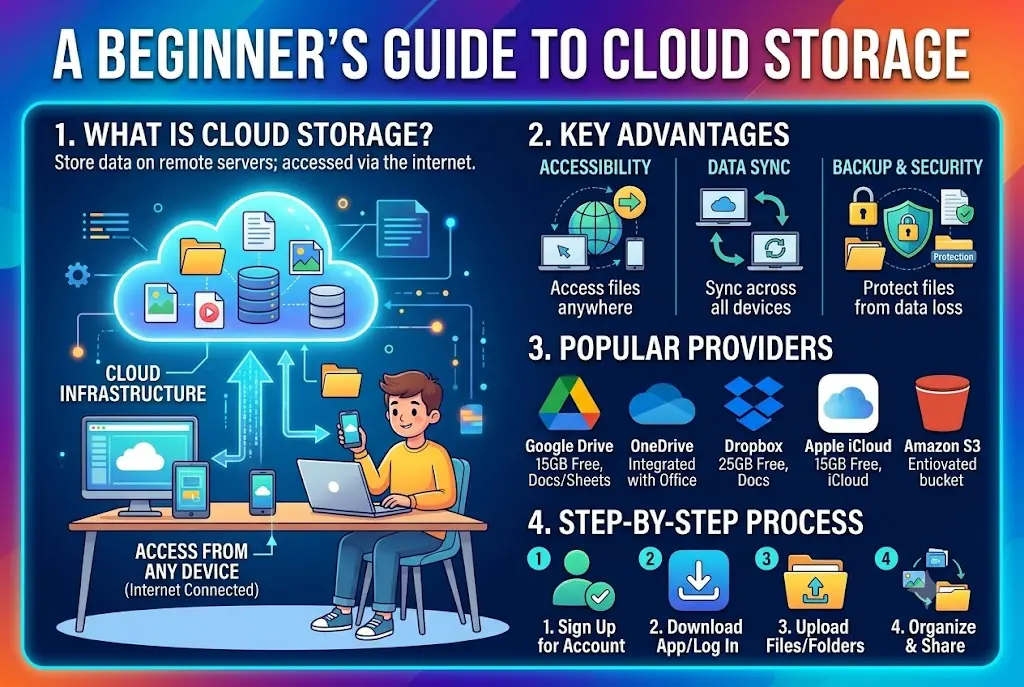
A beginner’s guide to cloud storage refers to an introduction to storing digital files on internet-connected servers rather than relying solely on local devices.
Cloud storage services maintain large data centers that securely store information. Users upload files to these servers and access them through computers, smartphones, tablets, or web browsers.
Common types of files stored in the cloud include:
- Documents
- Photos
- Videos
- Presentations
- Audio files
- Spreadsheets
- Backups
- Work projects
Instead of carrying physical storage devices everywhere, users can retrieve their information whenever an internet connection is available.
Cloud storage combines accessibility, convenience, and security into a single digital solution.
Why is A Beginner’s Guide to Cloud Storage Important?
Understanding cloud storage is important because digital information continues to grow rapidly.
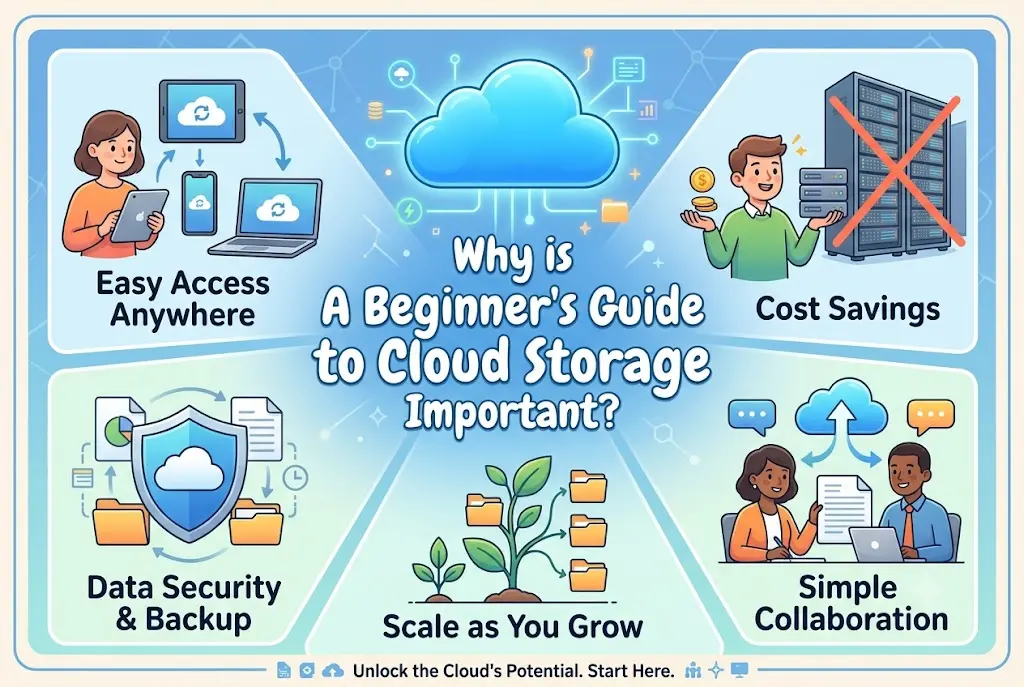
Easy Access to Files
Cloud storage allows users to access files from virtually any device connected to the internet.
Improved Data Protection
Files stored in the cloud are often protected through backups and security measures.
Better Collaboration
Teams can work on shared documents without constantly sending files back and forth.
Reduced Dependence on Physical Devices
Data remains available even if a computer or smartphone is lost or damaged.
Efficient Organization
Cloud platforms often include tools that help users organize and search files more effectively.
Scalability
Storage capacity can usually be increased as needs grow, making cloud solutions highly flexible.
Detailed Step-by-Step Guide
Step 1: Understand How Cloud Storage Works
Before using cloud storage, it is helpful to understand the basic concept.
The process typically works as follows:
- Create an account.
- Upload files to cloud servers.
- Access files through connected devices.
- Share files when needed.
- Manage storage through a user dashboard.
Understanding this process makes future tasks much easier.
Step 2: Determine Your Storage Needs
Different users require different amounts of storage.
Ask yourself:
- How many files do I store?
- Do I need photo backups?
- Will I store videos?
- Do I need business collaboration tools?
Clearly identifying your needs helps you select an appropriate storage plan.
Step 3: Create a Secure Account
Account security should be a top priority.
Use:
- Strong passwords
- Unique login credentials
- Multi-factor authentication
- Updated recovery information
Strong security practices help protect valuable files.
Step 4: Organize Your Files Before Uploading
A well-organized structure improves efficiency.
Create folders for:
- Work documents
- Personal files
- Photos
- Videos
- Educational materials
- Financial records
Proper organization saves time when searching for information later.
Step 5: Upload Important Files
Begin by uploading your most important files.
Examples include:
- Family photos
- School projects
- Business documents
- Personal records
Starting with essential files ensures they receive immediate protection.
Step 6: Enable Automatic Backups
Automatic backups reduce the risk of losing important information.
Benefits include:
- Continuous protection
- Reduced manual effort
- Better data recovery options
Many cloud platforms offer automated backup features.
Step 7: Synchronize Multiple Devices
Synchronization keeps files consistent across devices.
For example:
- Edit a document on a laptop
- Continue working on a tablet
- Review it later on a smartphone
Changes update automatically when synchronization is enabled.
Step 8: Learn File Sharing Features
Cloud storage simplifies file sharing.
Users can:
- Share documents
- Collaborate on projects
- Control access permissions
- Update files in real time
These features improve productivity and teamwork.
Step 9: Monitor Available Storage
Storage space is not unlimited.
Regularly review:
- Remaining capacity
- Large files
- Duplicate files
- Unused content
Effective management prevents unnecessary storage issues.
Step 10: Review Security Settings
Security settings help protect sensitive information.
Check:
- Login activity
- Device access
- Recovery options
- Shared permissions
Routine reviews improve overall account safety.
Step 11: Create Multiple Backups
Although cloud storage is reliable, multiple backups provide additional protection.
Consider maintaining:
- Cloud backups
- External drive backups
- Secondary backup copies
Multiple layers of protection reduce risk.
Step 12: Delete Unnecessary Files
Removing outdated content keeps storage organized.
Examples include:
- Duplicate photos
- Old downloads
- Temporary files
- Obsolete documents
Regular cleanup improves efficiency.
Step 13: Understand Recovery Options
Accidental deletions happen.
Learn how your cloud platform handles:
- Deleted files
- Recovery periods
- Version history
- Backup restoration
Recovery knowledge can prevent permanent data loss.
Step 14: Develop Long-Term Storage Habits
Cloud storage works best when used consistently.
Create habits such as:
- Weekly backups
- Monthly reviews
- Folder maintenance
- Security checks
Long-term organization improves productivity.
Benefits of A Beginner’s Guide to Cloud Storage
Cloud storage offers numerous advantages for individuals and organizations.
Key Benefits
- Easy access from multiple devices
- Improved file security
- Automatic backup options
- Reduced risk of data loss
- Better collaboration opportunities
- Convenient file sharing
- Flexible storage expansion
- Simplified file management
- Increased productivity
- Reduced dependence on physical storage
- Better disaster recovery options
- Real-time synchronization
- Enhanced accessibility
- Greater convenience for remote work
- Efficient document organization
These benefits explain why cloud storage continues to gain popularity worldwide.
Disadvantages / Risks
Despite its advantages, cloud storage also has limitations.
Potential Risks
- Dependence on internet connectivity
- Possible subscription costs
- Data privacy concerns
- Security breaches
- Account access issues
- Storage limitations on free plans
- Learning curve for beginners
- Service outages
- Potential synchronization errors
- Shared access mistakes
- Upload speed limitations
- Download delays for large files
- Vendor dependency
- Ongoing account management requirements
- Risk of weak password usage
Understanding these risks helps users make informed decisions.
Common Mistakes to Avoid
Using Weak Passwords
Weak passwords increase the likelihood of unauthorized access.
Ignoring Multi-Factor Authentication
Additional verification significantly improves account security.
Uploading Without Organization
Poor folder structures make file management difficult.
Forgetting Backups
Cloud storage should complement, not completely replace, backup strategies.
Sharing Files Carelessly
Always verify access permissions before sharing documents.
Ignoring Storage Limits
Running out of storage can interrupt workflows unexpectedly.
Neglecting Security Reviews
Periodic security checks help identify potential vulnerabilities.
Keeping Duplicate Files
Duplicates consume valuable storage space and create confusion.
What is cloud storage in simple terms?
Cloud storage is a method of storing files on internet-based servers instead of only keeping them on local devices.
Is cloud storage safe?
Cloud storage can be very secure when users follow recommended security practices such as strong passwords and multi-factor authentication.
Can I access cloud files from multiple devices?
Yes. Most cloud storage services allow access from computers, smartphones, tablets, and web browsers.
What happens if my device is lost?
Files stored in the cloud remain available and can typically be accessed from another authorized device.
Do I need an internet connection?
An internet connection is generally required for uploading, syncing, and accessing cloud-based files.
Can cloud storage replace external hard drives?
Cloud storage can complement external drives, but many users prefer maintaining both for additional protection.
How much storage do beginners need?
The amount varies depending on file types, but many users start with modest storage plans and expand later.
Why should I organize files in the cloud?
Proper organization improves efficiency, simplifies searches, and reduces confusion as file collections grow.
Expert Tips & Bonus Points
Successful cloud storage management involves more than simply uploading files.
Expert Tips
- Create logical folder structures.
- Enable automatic backups.
- Use strong passwords.
- Activate multi-factor authentication.
- Review permissions regularly.
- Remove duplicate files frequently.
- Monitor storage usage.
- Keep recovery information updated.
- Maintain local backups when possible.
- Review security settings every month.
Bonus Points
- Label folders clearly.
- Archive old projects.
- Use consistent naming conventions.
- Schedule routine maintenance.
- Educate family members about account security.
Small habits can significantly improve long-term organization and protection.
Conclusion
Understanding cloud storage is becoming increasingly important in today’s digital world. As more people rely on technology for work, education, communication, and entertainment, the need for reliable data storage solutions continues to grow. A beginner’s guide to cloud storage provides the knowledge needed to safely store, organize, access, and protect important information across multiple devices.
Cloud storage offers significant advantages, including accessibility, convenience, collaboration, backup protection, and scalability. By storing files online, users gain flexibility that traditional storage methods often cannot provide. At the same time, understanding potential risks such as security concerns, storage limitations, and internet dependence helps users make informed decisions and develop responsible storage habits.
Success with cloud storage depends on proper account security, thoughtful organization, regular maintenance, and consistent backup practices. Strong passwords, multi-factor authentication, periodic reviews, and careful file management all contribute to a safer and more efficient experience.
As digital information continues to expand, cloud storage will remain a valuable tool for individuals, families, students, and businesses. By applying the strategies, tips, and best practices discussed in this guide, beginners can confidently use cloud storage while protecting their files and maximizing the benefits of modern technology. With the right approach, cloud storage becomes a powerful solution for managing data securely and efficiently in an increasingly connected world.
